For sales assistance
describe your needs
* Tell us about your project or requirements. For general inquiries, reach out to us at contact@seekall.net, and we'll get back to you promptly.

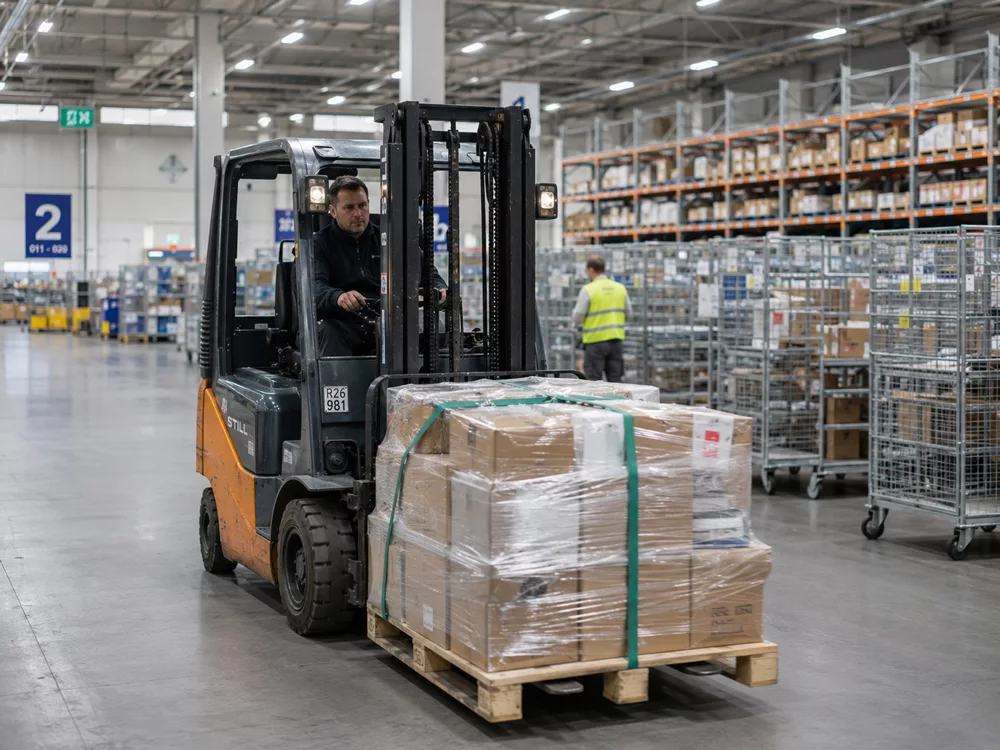
50,000+ parcels daily. SSD-RA long-range readers track forklifts in real time — idle time reduced by 30%.
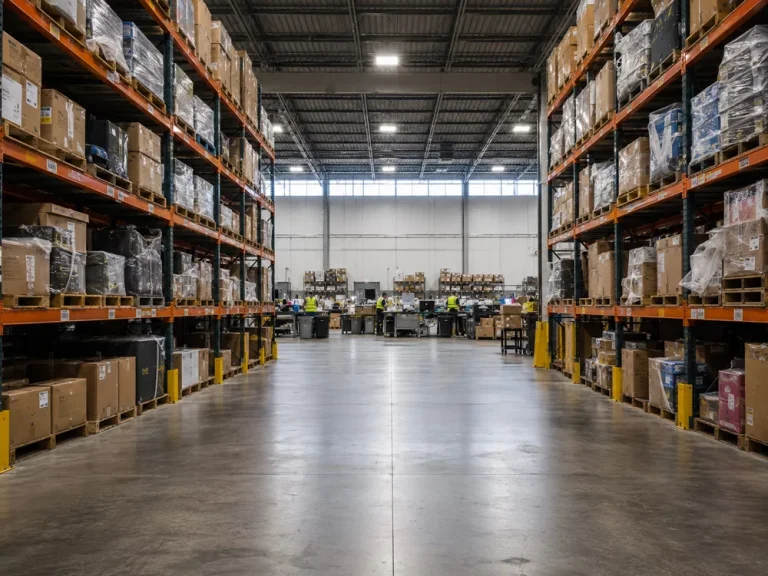
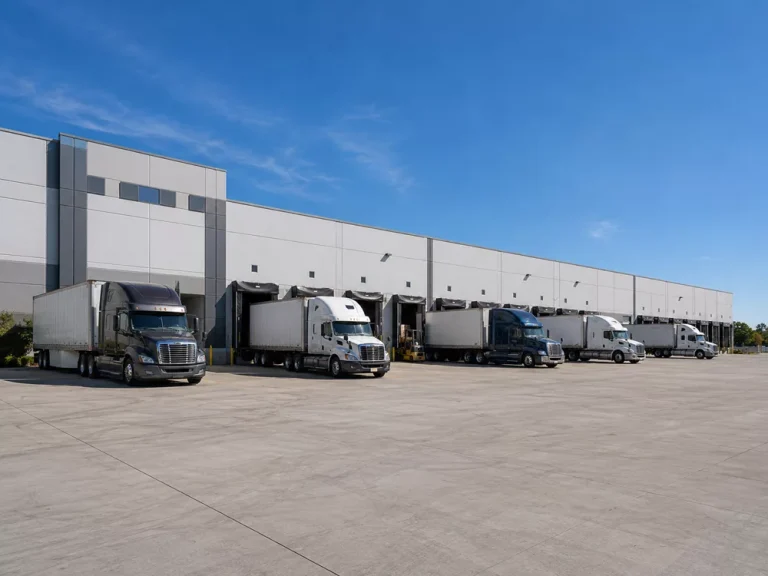
A large postal hub in a Nordic country handles approximately 60% of the nation’s parcel sorting and transfer operations, processing over 50,000 parcels daily. The facility covers roughly 80,000 square meters and operates more than 50 forklifts and tow tractors, responsible for continuously moving parcels and containers between receiving areas, sorting zones, staging areas, and dispatch bays.
The hub is divided into multiple operational zones, with forklifts moving frequently between them. Dispatchers communicated with drivers via two-way radio to confirm vehicle locations and task status. As e-commerce parcel volumes grew at an average annual rate of 15%, the demand for forklifts continued to rise, but existing vehicle utilization remained low, and dispatching efficiency became a bottleneck.
Management observed that drivers spent significant time waiting for task assignments or driving empty in the wrong zones. If the real-time location and status of each forklift could be tracked, idle time and unnecessary travel could be significantly reduced, improving overall transfer efficiency.
The postal hub faced four critical issues with forklift dispatching and tracking:
Lack of vehicle location visibility – Dispatchers could not see which zone each forklift was in or what it was doing in real time. They had to ask drivers via radio, which was inefficient and provided outdated information.
Excessive idle time – Without knowing vehicle locations, dispatchers often assigned tasks to distant vehicles while nearby idle forklifts went unnoticed. Drivers spent a significant portion of their shifts waiting for assignments.
Zone congestion – During peak hours, some areas (such as dispatch bays) became overcrowded with forklifts, while other areas (such as receiving zones) had insufficient vehicles. Dispatchers lacked data to balance zone distribution.
Slow task response – When urgent tasks required immediate vehicle assignment, dispatchers had to contact drivers individually to locate the nearest available forklift. Response times were often too long, affecting parcel transfer timelines.
The postal hub deployed a real-time forklift locating and dispatching system using SSD-RA09L long-range readers.
Deployment configuration:
An SSD-RA09L reader was installed on the carriage of each forklift, positioned at the front of the vehicle facing forward toward the load area. Each forklift was also fitted with an RFID tag encoding its vehicle ID. The readers communicated with the dispatching system in real time via Wi-Fi.
Installation position:
The carriage is the metal frame structure at the front of the forklift, located directly above the forks. Mounting the SSD-RA09L on the carriage positions the reader directly facing the load on the forks, enabling it to read RFID tags on palletized goods while also picking up location tags embedded in the floor or racking, achieving both cargo tracking and forklift positioning in one deployment.
How it works:
Key advantage:
The system requires no manual input from drivers. Forklifts are automatically identified and tracked as they operate, adding no extra workload. Dispatchers shift from passively waiting for driver reports to actively monitoring real-time positions, significantly improving dispatching efficiency.
Key requirements for forklift tracking in a postal hub include long-range identification, high reliability, durability, and real-time data transmission. The SSD-RA09L was selected for the following reasons:
9dBi gain with 20-meter read range – The 9dBi antenna provides an optimal balance between read distance and beam focus. The 20-meter range ensures consistent identification during forklift operations without requiring the vehicle to slow down or approach fixed readers.
Rugged and durable – The reinforced housing is designed to withstand vibration, dust, and temperature fluctuations in industrial environments. Forklifts operate continuously in demanding conditions, making equipment reliability critical.
High sensitivity – Delivers stable read performance in complex RF environments, unaffected by metal racking, other electronic equipment, or multiple forklifts operating simultaneously.
Real-time data transmission – Uploads read data to the dispatching system in real time via Wi-Fi, allowing dispatchers to see location and load updates within seconds.
Six months after deployment, the postal hub reported measurable improvements:
Forklift idle time reduced by 30% – Dispatchers could view vehicle locations in real time and assign tasks to the nearest available forklift. Driver waiting time decreased significantly.
Task response time improved – Time from urgent task issuance to vehicle arrival at the location was reduced, ensuring parcel transfer timelines were met.
Cargo tracking accuracy improved – The readers automatically recorded cargo tags during transport. The binding between pallets and forklifts was updated in real time, reducing information loss during transfers.
Dispatcher workload reduced – Frequent radio calls to ask drivers for locations were eliminated. Dispatchers transitioned from reactive communication to proactive task assignment.
Based on the success of this system, the postal hub plans to extend the same tracking solution to tow tractors and other mobile equipment, covering all 80+ vehicles in the facility.
By deploying SSD-RA09L long-range readers on the carriage of each forklift, the Nordic postal hub achieved real-time visibility of forklift locations and automated cargo tracking. Idle time was reduced by 30%, and task response times improved significantly. The system was simple to deploy, required no driver operation, and proved reliable in a high-intensity environment processing 50,000 parcels daily. The postal hub is now extending the solution to all mobile equipment to further improve overall operational efficiency.